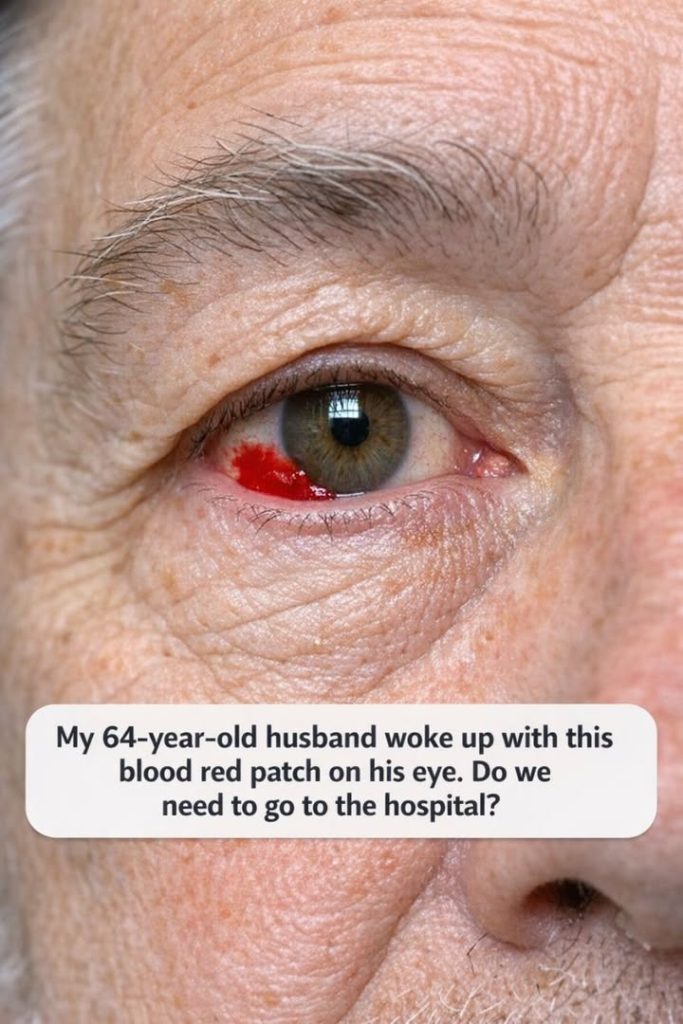
Age-related changes in blood vessel elasticity and the thinning of tissues can also make older adults more susceptible. Other triggers include sudden increases in blood pressure, heavy lifting, or taking certain medications that affect blood clotting.
4. When a Red Eye Patch Is a Sign of High Blood Pressure or Blood Thinner Issues
High blood pressure can increase the risk of subconjunctival hemorrhages by putting extra pressure on blood vessels, making them more likely to break. A sudden spike in blood pressure, even if temporary, can lead to these types of eye hemorrhages.
Similarly, people taking blood thinners may experience these hemorrhages more frequently. Blood thinners can affect how blood clots, making it easier for bleeding to occur even with minor vascular trauma.
5. Red Flag Symptoms That Mean You Should Go to the ER Right Now
While most subconjunctival hemorrhages are benign, certain symptoms warrant immediate medical attention. If the red patch is accompanied by pain, vision changes, or if the hemorrhage is very large, it is advisable to seek emergency care.
Additionally, if your partner experiences severe headaches, dizziness, or other neurological symptoms along with the hemorrhage, these could be signs of more serious underlying conditions such as a stroke or significant trauma.
6. When It’s Safe to Call the GP or Eye Doctor Instead of Going to Hospital
If the red patch on the eye is not accompanied by any worrying symptoms such as pain or vision changes, it is usually safe to contact your general practitioner or an eye specialist for advice.
Doctors can provide reassurance and may suggest monitoring the condition. They may also recommend an eye examination to rule out any other potential eye issues.
7. Simple At-Home Care: What Helps and What to Avoid
At home, ensure your partner avoids rubbing their eyes, as this can exacerbate the condition. Artificial tears or eye drops can help alleviate dryness or irritation if present.
It is generally advisable to avoid strenuous activities or anything that could increase blood pressure suddenly. Maintaining good eye hygiene and protecting the eyes from potential irritants is also beneficial.
8. How Long It Takes to Clear and What Recovery Looks Like
A subconjunctival hemorrhage typically resolves within one to two weeks. As the blood is reabsorbed, the red patch may change colors, similar to the way a bruise fades.
The recovery is straightforward, with no specific treatment required. It’s a matter of allowing the body to heal naturally, observing any changes, and avoiding further strain on the eyes.
9. Could This Happen Again? Recurrence, Stroke Risk, and Other Concerns
For some individuals, particularly those on blood thinners or with elevated blood pressure, the risk of recurrence is higher. However, having a subconjunctival hemorrhage does not inherently increase the risk of stroke.
Regular medical check-ups to manage blood pressure and review medications can help reduce the likelihood of recurrence. Maintaining a healthy lifestyle and managing stress are also important preventive measures.
10. What To Ask the Doctor if It Happens to Your Partner
My 64-year-old husband woke up with this blood red patch on his eye. Do we need to go to the hospital?