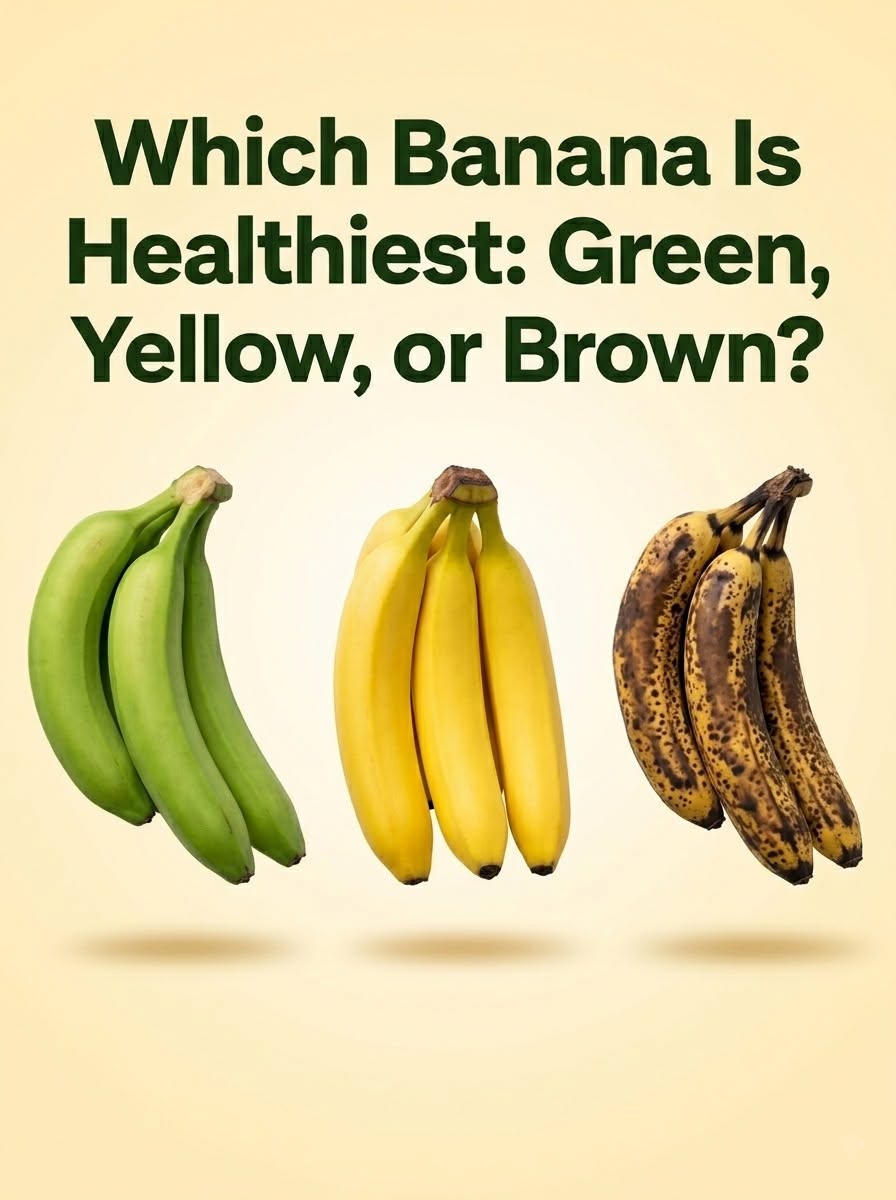
Green, Yellow, or Brown …Which Banana Is Actually the Healthiest
Bananas are one of the world’s most beloved fruits—and for good reason. They’re affordable, portable, naturally sweet, and packed with essential nutrients. Whether tossed into a smoothie, sliced over oatmeal, or enjoyed as a quick snack, bananas have earned their place in countless kitchens.
But here’s something many people don’t realize: a banana’s nutritional profile changes significantly as it ripens.
That bright green banana sitting on your counter offers different health benefits than the perfectly yellow one beside it. And those brown, spotty bananas that often get overlooked? They may actually be nutritional powerhouses.
So, which banana is the healthiest? The answer depends on your health goals.
Let’s explore how bananas transform as they ripen—and which stage might be best for you.
The Science of Banana Ripening
As bananas mature, complex carbohydrates called starches gradually break down into simple natural sugars. This process changes not only the fruit’s taste and texture but also how your body digests and utilizes it.
The journey from green to yellow to brown involves several nutritional shifts that can impact digestion, blood sugar levels, and antioxidant intake.
Green Bananas: Best for Blood Sugar Control and Fullness
Green bananas are the least ripe stage and contain the highest amount of resistant starch.
Resistant starch behaves similarly to dietary fiber because it resists digestion in the small intestine and travels to the colon, where it supports beneficial gut bacteria.