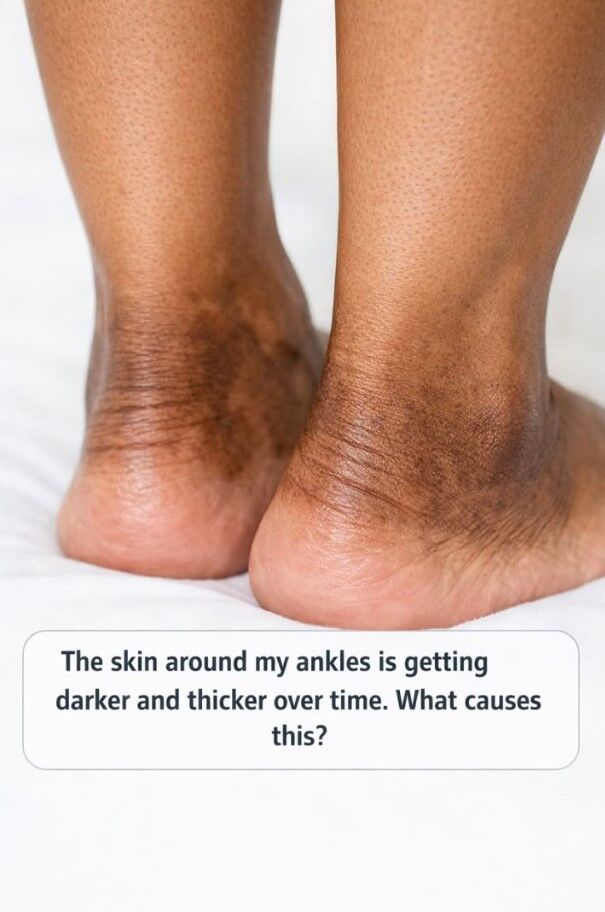
1. Friction and Pressure
One of the most common causes is repeated friction.
Wearing tight shoes, socks, or straps that rub against your ankles can lead to:
Skin thickening (as protection)
Darkening over time
The skin reacts by becoming tougher and more pigmented in those areas.
2. Dry Skin (Xerosis)
Dry skin is a very common issue, especially in colder weather or with frequent washing.
When the skin lacks moisture:
It can become rough and flaky
It may appear darker or dull
It can thicken over time
Regular moisturizing often improves this condition.
3. Hyperpigmentation
Hyperpigmentation occurs when certain areas of skin produce more melanin.
This can be caused by:
Sun exposure
Irritation or inflammation
Previous skin injury
The ankles are especially prone because they are often exposed and subject to friction.
4. Acanthosis Nigricans
In some cases, thick, darkened skin may be linked to a condition called Acanthosis Nigricans.
This condition is often associated with:
Insulin resistance
Weight gain
Hormonal imbalances
It typically appears as velvety, dark patches of skin and may occur around the neck, armpits, or ankles.
5. Poor Circulation
Circulation issues can also affect the skin’s appearance.
When blood flow is reduced:
Skin may appear darker or slightly swollen
Tissue may thicken over time
This is more common in people who stand or sit for long periods.
6. Eczema or Skin Irritation
Chronic skin conditions like Eczema can lead to thickened, darker patches.
Repeated scratching or irritation can cause:
Skin thickening (lichenification)
Increased pigmentation
7. Hormonal Changes
Hormones can influence skin color and texture.
Changes related to:
Thyroid issues
Insulin levels
Other hormonal imbalances
may contribute to darker skin in certain areas.
What Your Body Might Be Telling You
In many cases, your body is signaling that something needs attention.