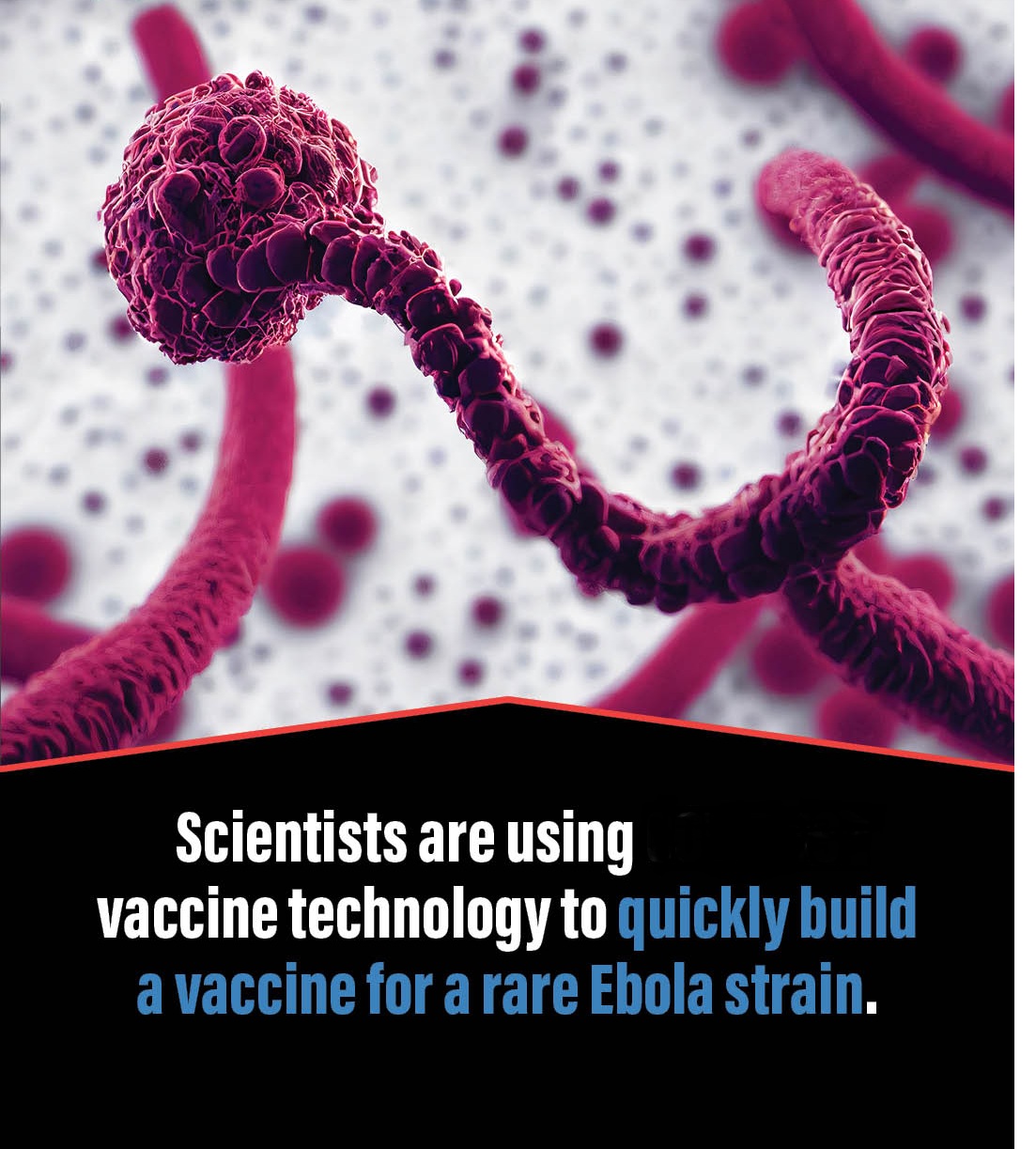
Scientists in the UK are racing to develop a new Ebola vaccine that could be ready for human trials within months as an outbreak grows in Central Africa.
Researchers at Oxford University say they are urgently adapting vaccine technology originally used during the COVID-19 pandemic to target the rare Bundibugyo strain of Ebola — a version of the virus for which there is currently no proven vaccine.
The outbreak, centered in the Democratic Republic of Congo, has already led to hundreds of suspected cases and dozens of deaths. Bundibugyo Ebola kills about one-third of those infected, making rapid vaccine development critical if the outbreak worsens.
The vaccine uses a genetically modified chimpanzee cold virus to safely train the immune system to recognize and fight Ebola without causing infection itself.
The situation unfolding in Central Africa is incredibly serious, and the speed at which the scientific community is trying to pivot is remarkable.
The current outbreak in the Democratic Republic of the Congo (DRC) and neighboring Uganda has been declared a Public Health Emergency of International Concern by the World Health Organization (WHO). It is moving rapidly, with total suspected and confirmed cases already surpassing 1,000.
Here is what is happening behind the scenes with the vaccine race and the unique challenges this specific outbreak presents:
The Vaccine Target: The Bundibugyo Strain
The core issue driving this frantic race is the type of Ebola virus causing the outbreak.
-
No Existing Vaccine: While highly effective vaccines (like Ervebo) exist for the more common Zaire strain of Ebola, they do not cross-protect against the Bundibugyo strain ($BDBV$) currently circulating.
-
High Fatality: This particular strain has a historical mortality rate between 30% and 50%, making an effective response critical.
Recent Articles
Pages: 1 2